Unlock Seoul: Your Essential Metro & Bus Survival Guide
"The subway is the heartbeat of the city, but without a plan, you're just a traveler lost in a labyrinth of neon and steel."
Navigating Seoul can feel like stepping into a high-speed puzzle, but once you understand the logic, the city opens up to you. This guide will teach you how to master the T-money tap, decode the color-coded lines, and transition from a confused tourist to a local-style commuter.
* The integrated metro and bus system is faster and cheaper than taxis for most city travel. * A T-money card is your non-negotiable essential for all transit and convenience store purchases. * Real-time apps like Naver Maps are far more accurate in Korea than Google Maps.
The Foundation: Getting Started with Seoul Transit
I remember standing in the middle of Myeongdong Station during a Friday evening rush in late 2025, staring at a sea of people moving with terrifyingly efficient purpose. The sheer scale of the underground labyrinth felt overwhelming until I realized everyone was following a simple, rhythmic logic.
According to World Bank, South Korea recorded international tourist arrivals of 2,519,000 in 2020.
The Seoul transit ecosystem is divided into two primary worlds: the Metro and the Bus. The Metro is your high-speed backbone, perfect for traversing long distances between major hubs like Gangnam and Hongdae.
In contrast, the bus system offers hyper-local coverage, acting as the vital connective tissue that reaches deep into hilly neighborhoods like Bukchon Hanok Village where tracks cannot go.
To move through these worlds, you need a T-money card. You can purchase these at any convenience store, such as GS25 or CU, located in almost every subway station and street corner. When you buy one, you will need to "top it up" with cash at the station kiosks or the convenience store counter.
In 2026, you will find that almost all transit-related cash transactions still require physical bills.
Always tap your card both when you enter and when you exit; failing to tap out on a bus or at a subway gate can lead to incorrect fare calculations or even being blocked from using the transfer discount. Understanding the map is the next hurdle.
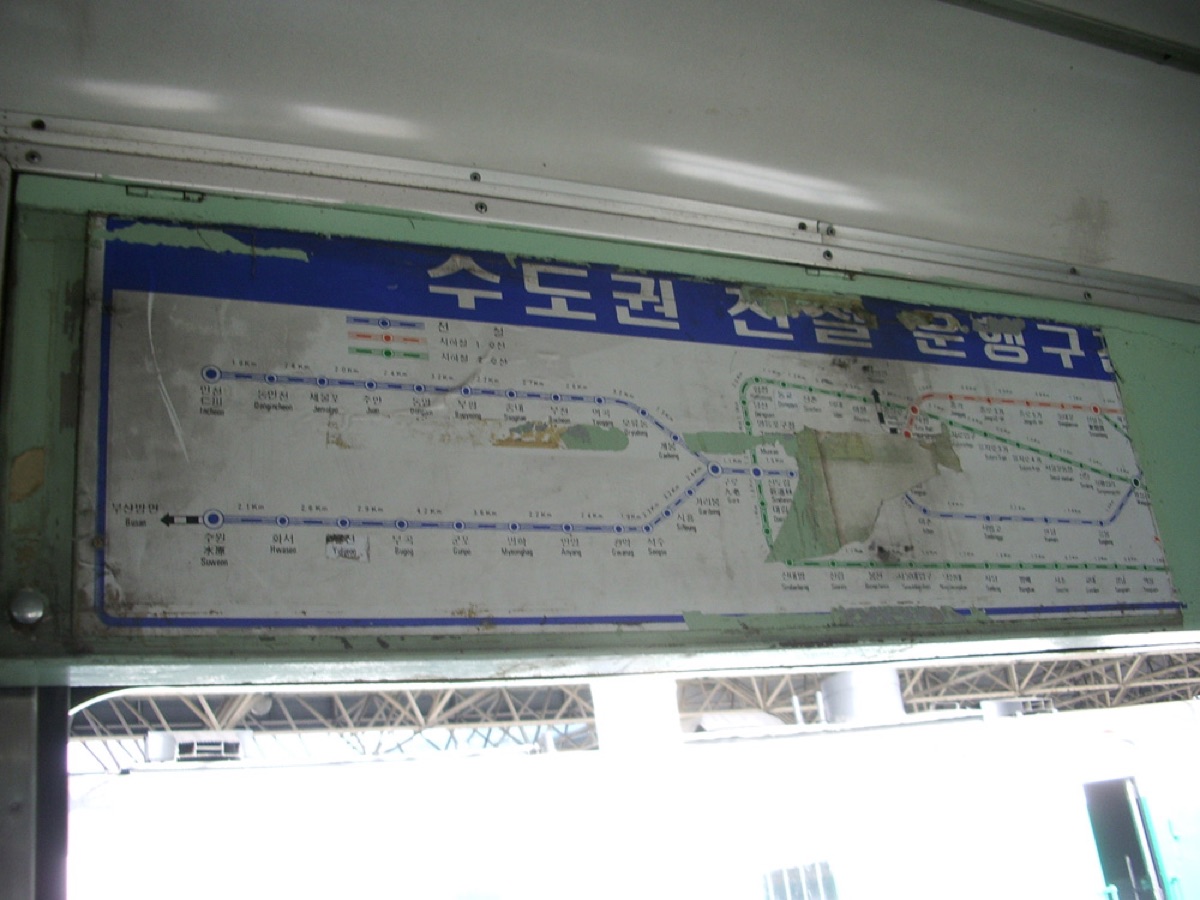
The metro lines are color-coded and numbered, making them easy to follow visually. For example, Line 3 is orange, while Line 5 is purple.
Some lines also feature "Express" trains that skip certain stops to move faster—always check the signage to ensure you aren't accidentally skipping your destination.
The Backbone: Mastering the Metro
I once spent forty minutes wandering in circles at Seoul Station in the winter of 2025 because I didn't realize I had entered the wrong transfer corridor.
It took a polite tap from a local to point me toward the correct platform, but that mistake taught me the importance of following the floor markings.
To ride the metro without stress, follow this foolproof sequence: 1. Input your destination into a transit app to find the exact station and exit number. 2. Locate the specific entrance/line color at the station entrance. 3. Tap your T-money card against the sensor at the turnstile to enter. 4.
When you reach your stop, exit the gates and tap your card again to complete the journey. 5. If transferring, follow the colored signs in the station to the connecting line; you won't need to tap a new card unless you exit the station entirely.
Timing is everything in a city of millions. Peak rush hours typically occur between 7:30 AM – 9:00 AM and 6:00 PM – 7:30 PM. During these times, stations become incredibly crowded, and trains can be packed tightly.
If you can, plan your long-distance travel during off-peak hours to enjoy a much more comfortable ride. Using a transit app is vital during these times to check for real-time delays or service interruptions that might reroute your journey.
The Local Explorer: Why Do We Need Buses?
Walking out of a subway exit into a quiet residential alleyway in Seongsu-dong is often where the real magic of Seoul happens. The metro might get you to the neighborhood, but the bus gets you to the doorstep.
Buses are essential when the metro doesn't reach your specific destination. While the metro is built for speed and distance, buses conquer the smaller, winding streets of the city.
In Seoul, you will encounter different types of buses: blue buses usually run on main roads for longer distances, while green buses act as feeders, connecting residential areas to subway stations.
When riding the bus, remember that you must tap your T-money card on the reader near the driver when you board, and crucially, you must tap it again at the reader near the exit door when you get off. This second tap is what triggers the transfer discount.
If you are riding a bus and want to get off at the next stop, you usually need to press the red "Stop" button located on the handrails to signal the driver.
The beauty of the system lies in the seamless transfer. If you move from a subway line to a bus (or vice versa) within a specific grace period—usually 30 minutes—the system applies a significant discount to your fare. This makes multi-modal travel incredibly affordable.

The Pro Tips: What is the Real Difference?
I once watched a local traveler navigate a complex transfer at Jongno-3-ga station in under thirty seconds, while I was still squinting at a paper map. It wasn't magic; it was just knowing how the system was designed to work.
Understanding the pricing structure is key to managing your travel budget. The base fare is determined by the initial boarding, but as you travel longer distances, additional small charges may be added to your T-money balance.
You can always check your remaining balance by looking at the small screen on the card readers at subway gates or by asking a staff member at a station information desk.
| Feature | Metro (Subway) | Bus |
|---|---|---|
| Primary Use | Long-distance, high-speed | Local, neighborhood access |
| Frequency | Very high (every few mins) | Varies by route/time |
| Ease of Navigation | High (color-coded/numbered) | Moderate (requires app/map) |
| Transferability | High (with other lines/buses) | High (with subway/other buses) |
Since English is widely understood but Korean is the language of the streets, learning a few key terms can break the ice. * Hwan-seung (환승): Transfer * Seung-cha (승차): Boarding/Getting on * Ha-cha (하차): Alighting/Getting off * Yeok (역): Station
Always rely on digital tools. In Seoul, Google Maps often lacks the granular, real-time data required for perfect navigation.
Download Naver Maps or KakaoMap; they provide much more accurate information regarding exact bus arrival times, walking directions, and even which subway exit is closest to your destination.





Comments 0